- +91 99962 30055
- info@pharmresbull.com
Pharma Research Bulletin – Pharmaceutical & Clinical Research Updates

Volume 5, Issue 2, 2026
Number of Articles - 5

Artificial Intelligence and Emerging Technologies in Drug Discovery and Smart Therapeutics
Bhawna Chopra*.
Guru Gobind Singh College of Pharmacy, Yamuna Nagar-135001, Haryana, India.
Abstract
Artificial Intelligence and Emerging Technologies in Drug Discovery and Smart Therapeutics
Cite
Chopra B. Artificial Intelligence and Emerging Technologies in Drug Discovery and Smart Therapeutics. Pharm Res Bull. 2026;5(2):1-2.
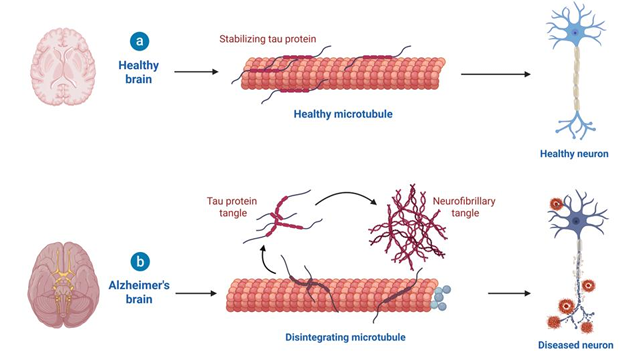
Artificial Intelligence-Driven Formulation Strategies for Targeted Drug Delivery in Alzheimer’s Disease: Bridging Pharmaceutics and Precision Medicine.
Dushyant*, Smita Narwal, Jagdeep Singh, Rupa Devi, Nisha Grewal.
Global Research Institute of Pharmacy, Radaur, Yamuna Nagar-135133, Haryana, India.
Abstract
Artificial Intelligence-Driven Formulation Strategies for Targeted Drug Delivery in Alzheimer's Disease: Bridging Pharmaceutics and Precision Medicine.
Alzheimer's disease (AD) is a challenging disease with its complex pathology, moderate therapeutic efficacy, and impaired drug delivery to the brain. The traditional pharma strategies cannot deliver site-specific delivery and optimal bioavailability; therefore, new-generation formulation technologies are in demand. This review highlights non-AI-based formulation technologies, which are revolutionizing targeted drug delivery in AD by fulfilling the promise of precision medicine. Lipid-based drug delivery systems, such as liposomes and solid lipid nanoparticles, are prospective candidates for enhanced drug penetration across the blood-brain barrier, while polymeric nanoparticles and dendrimers provide sustained release with enhanced targeting. Intranasal drug delivery systems also provide non-invasive direct nose-to-brain delivery with systemic breakdown avoidance. Stimuli-responsive delivery systems, prodrug systems, and mucoadhesive systems are also providing patient-specific delivery profiles for enhanced patient compliance and therapeutic efficacy.
Together with pharmacogenomics and molecular profiling, these approaches enable individualized therapies in heterogeneous populations of AD with reduced clinical outcome variability. The review critically examines these formulation technologies by assessing their design, mechanism of action, therapeutic utility, and translatability. Intersecting pharmaceutics and precision medicine independent of artificial intelligence, this approach enables more predictable, safe, and potent therapies in AD. The article calls for additional research into new, AI-proof technologies to address the intricate issues of drug delivery in Alzheimer's.
Cite
Dushyant, Narwal N, Singh J, Devi R, Grewal N. Artificial Intelligence-Driven Formulation Strategies for Targeted Drug Delivery in Alzheimer's Disease: Bridging Pharmaceutics and Precision Medicine. Pharm Res Bull. 2026;5(2):3-17.
Smart Drug Delivery Systems: Responsive Technologies in Pharmacology.
Vishal Chanalia*, Khushbu, Smita Narwal, Tekchand, Gurpreet Singh.
Global Research Institute of Pharmacy, Radaur, Yamuna Nagar-135133, Haryana, India.
Abstract
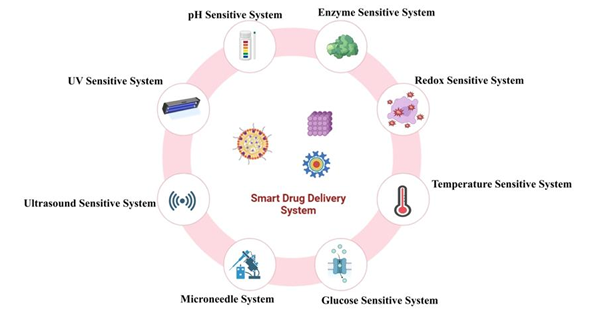
Smart Drug Delivery Systems: Responsive Technologies in Pharmacology
Pharmacology is undergoing a technological transformation, increasingly driven by a desire for
accuracy and customization in medical care. Conventional drug delivery techniques are limited by nonspecific
distribution, require frequent dosing, and pose a significant risk of dose-limiting side effects. Smart drug
delivery systems (SDDS) are changing this field by enabling targeted localization and stimuli-triggered release
of therapeutic agents. These systems combine developments in materials science—especially in polymers,
nanomaterials, and hybrid organic-inorganic platforms—with molecular targeting and real-time sensing
technologies to guarantee that drugs are delivered only at the appropriate site, time, and dosage. Intelligent
drug delivery systems (SDDS) harness a variety of internal and external stimuli—such as changes in pH,
temperature fluctuations, enzymatic activity, redox gradients, exposure to light, application of magnetic fields,
and real-time biosensor feedback—to adapt dynamically to evolving physiological and pathological conditions
within the body. By accurately regulating drug release triggered by these specific stimuli, smart drug delivery
systems (SDDS) aim to significantly improve therapeutic effectiveness while reducing systemic toxicity and
harmful side effects. These advanced delivery platforms also support the ongoing shift toward personalized
medicine by enabling tailored treatment strategies that respond to individual patient needs and disease profiles.
This chapter provides a concise overview of the core principles, enabling technologies, stimulus-responsive
mechanisms, clinical applications, current challenges, and future perspectives of smart drug delivery,
positioning SDDS at the forefront of innovative next-generation pharmacotherapy.
Cite
Chanalia V, Khushbu, Narwal S, Tekchand, Singh G. Smart Drug Delivery Systems: Responsive Technologies in Pharmacology. Pharm Res Bull. 2026;5(2):18-25.

Liquid and Tissue Biopsies: The Twin Pillars of Precision Diagnostics.
Prachi Jagdev, Sarita Sharma*, Jaipreet Singh, Deepa Rani, Shraddha Pareek.
M.M. College of Pharmacy, Maharishi Markandeshwar (Deemed to be University), Mullana-133207, Ambala, Haryana, India.
Abstract
Liquid and Tissue Biopsies: The Twin Pillars of Precision Diagnostics
Cancer is a serious global health issue, resulting in millions of fatalities annually. Timely diagnosis
is essential for enhancing patient outcomes, guiding treatment alternatives, and reducing disease burden,
resulting in increased survival rates and improved quality of life. Precision oncology recognises that tumors,
even among identical cancer diagnoses, include unique genetic compositions that might influence their
behaviour and therapeutic response. Precision oncology is undergoing a paradigm shift by integrating liquid
and tissue biopsies as complementary diagnostic tools. Tissue biopsy is a gold standard for histopathological
and genetic characterisation of cancer, offering direct insight into tumor architecture and cellular diversity.
The invasiveness and sampling constraints of this method may impede disease monitoring and obstruct the
assessment of tumor evolution. Utilising high-throughput sequencing, multi-omics, and sophisticated
analytical platforms, medical professionals and researchers may get real-time, non-invasive, and thorough
insights into tumor biology. Liquid biopsy, as a developing approach, allows minimally invasive, real-time
cancer profiling by the detection of circulating tumor cells (CTCs), circulating tumor DNA (ctDNA), and
extracellular vesicles in biological fluids such as blood, saliva, and urine. This technique improves tissue
biopsy by offering thorough monitoring, minimising patient pain, following tumor progression, identifying
minimal residual disease, and evaluating therapy efficacy and resistance. Tissue biopsy is required for initial
diagnosis and therapy selection, while liquid biopsy is used for ongoing surveillance and early identification
of treatment failure or recurrence. The integration of these "twin pillars" is expected to revolutionise cancer
diagnosis, enhancing precision medicine via patient-centered strategies and perhaps producing improved
outcomes.
Cite
Jagdev P, Sharma S, Singh J, Rani D, Pareek S. Liquid and Tissue Biopsies: The Twin Pillars of Precision Diagnostics. Pharm Res Bull. 2026;5(2):26-34.
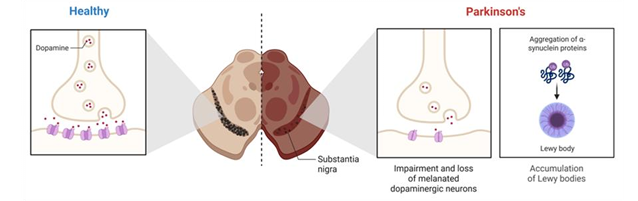
Smart Diagnosis and Treatment of Parkinson’s Disease Using Artificial Intelligence: Enhancing Motor Symptom Tracking and Deep Brain Stimulation Control.
Rupa Devi*, Dushyant, Mohit Kumar, Jasmeen Kaur, Smita Narwal, Vishakha Saini.
Global Research Institute of Pharmacy, Radaur, Yamuna Nagar-135133, Haryana, India.
Abstract
Smart Diagnosis and Treatment of Parkinson’s Disease Using Artificial Intelligence: Enhancing Motor Symptom Tracking and Deep Brain Stimulation Control
Parkinson's Disease (PD) is a multifaceted neurodegenerative condition with persistent and long
standing motor and non-motor symptoms that significantly affect patients' quality of life. The conventional
diagnosis and therapy are typically plagued by subjectivity, delayed diagnosis, and sporadic monitoring of
signs. Recent developments in Artificial Intelligence (AI) provide effective solutions to address the above
shortcomings by providing smart, real-time, and personalized management of PD. This chapter explores the
two-sidled role of AI in PD, focusing particularly on its application in monitoring motor symptoms and
maximizing DBS therapy. AI technologies such as machine learning (ML), deep learning (DL), natural
language processing (NLP), and computer vision are applied to early diagnosis, mimicking syndrome
differentiation, and objective symptom monitoring of tremor, bradykinesia, and gait disturbances. The chapter
also addresses wearable sensor systems and mHealth applications integration for ongoing data collection and
AI-powered analysis. The technologies enable real-time evaluation, treatment personalization, and augmented
clinical decision support. AI models also have the capacity to enhance DBS benefits by dynamically adjusting
stimulation parameters based on symptom variability. Through the fusion of multimodal data from wearable
sensors, neuroimaging, electronic health records, and genomics, AI opens the door to precision neurology.
This chapter summarizes the existing advancements, technical frameworks, and directions of AI-supported PD
treatment, outlining its revolutionary potential in neurology and digital therapeutics.
Cite
Devi R, Dushyant, Kumar M, Kaur J, Narwal N, Saini V. Smart Diagnosis and Treatment of Parkinson’s Disease Using Artificial Intelligence: Enhancing Motor Symptom Tracking and Deep Brain Stimulation Control. Pharm Res Bull. 2026;5(2):35-44.
Revolutionizing Pharmacy: The Transformative Power of Artificial Intelligence and Machine Learning in Drug Discovery and Patient Care.
Shakshi
Global Research Institute of Pharmacy, Radaur, Yamuna Nagar, 135133, Haryana, India.
Abstract
Revolutionizing Pharmacy: The Transformative Power of Artificial Intelligence and Machine Learning in Drug Discovery and Patient Care
Pharmaceutical sciences are currently experiencing a truly transformational change from historical
empirical concepts to data-driven Artificial Intelligence (AI)/ Machine Learning (ML) innovation applications.
The author is one of the key transformational drivers. Their application in drug discovery, clinical trials,
pharmacovigilance and personalised medicine has promoted research efficiency and quality. Meanwhile,
shortening the time of the drug development cycle is helpful to control costs and increase therapeutic precision.
AI algorithms accurately predict new drug targets, molecular interactions, formulations, and repurposed
therapies. AI in clinical applications is capable of patient-tailored dose optimization, real-time adverse drug
reaction (ADR) diagnosis, and intelligent prescription control for preventing medication errors. Deep learning
and natural language processing (NLP) can also assist researchers in drawing upon the deep wells of
biomedical literature and unstructured data, plus computer vision adds to quality control and imaging-based
diagnostics. Additionally, AI-based big data analytics helps in predictive modelling for treatment results and
disease prognosis. With its large potential, however, challenges remain in data privacy, algorithmic bias,
explainability and regulatory adoption. This perspective article takes a look at mechanistic approaches of AI
and ML in pharmaceutical sciences, including their connection to big data and biopharmaceutical research,
and the developing ethical and regulatory landscape. The research demonstrates how mindful AI adoption can
transform care delivery, optimise drug operations and usher in a new dawn of intelligent, patient-focused
therapeutics.